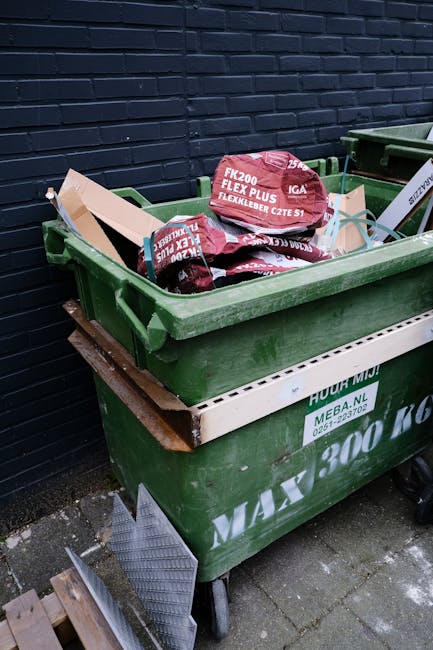
Commercial Waste in Parsons Green

Commercial waste in Parsons Green needs a practical, organised approach that suits the way local businesses work day to day. We handle waste removal for premises that produce mixed business refuse, bulky items, redundant fixtures and reusable materials, with a service shaped around clear collection arrangements and straightforward disposal. The aim is simple: keep workspaces usable while waste is dealt with responsibly and in line with the type of load.
Our business waste removal service is designed for offices, shops, hospitality settings and other commercial premises that need regular clearance or one-off help. Depending on the material, we can separate items for recycling, recovery or disposal, and we can advise on sensible presentation of the load before collection. If you are comparing options, pricing and quotes is a useful place to start when you want to understand the main cost factors before requesting a quotation.
For a tailored quotation, tell us what needs clearing, how much there is and where it is located within the building. If you already know the type of waste, that helps us match the right method to the job. If not, we can still work from a general description and arrange the next step. Simple details lead to a more accurate estimate.
Business waste removal for everyday operations

Business waste removal covers the routine and occasional materials that build up in workplaces, including packaging, paperwork, display items, storage contents, broken office equipment and general refuse. The service is useful when your internal bins are no longer enough, when a unit is being refreshed, or when you want to clear accumulated items without interrupting trading for longer than necessary. We work with the load as it stands, rather than expecting you to pre-sort every item into separate streams.
Where access is straightforward, collections can be planned around your opening hours and internal movement, so staff can keep working while the waste is removed. If there are stairs, narrow corridors, shared entrances or restricted loading points, these can affect how the clearance is organised. A clear description of access is helpful, particularly when items are located in storage rooms, upper floors or back-of-house areas. Waste that is awkward to reach still needs the right handling, not just a van.
Typical materials in this type of service may include:
- cardboard, wrapping and packaging waste
- old stock, retail fixtures and shelving
- desks, chairs and worn office furniture
- mixed non-hazardous general business rubbish
- redundant items removed during a refit or relocation
Office clearance and internal workspace change

Office clearance is useful when you need to empty part of a workplace, remove surplus furniture or clear rooms before a new layout is introduced. The service can cover desks, meeting tables, chairs, cabinets, archive material and miscellaneous items no longer needed in day-to-day use. A careful approach matters because office clearances often involve a mixture of reusable, recyclable and general waste items that should be separated sensibly.
In a commercial setting, a clearance is often about more than removing visible clutter. It may involve clearing a single floor, preparing a suite for refurbishment, or removing items left behind after a move. We can work with the contents presented and discuss what should stay, what should go and whether any items need special handling because of weight, condition or material. Where there are records or confidential papers, a separate shredding route may be more suitable than general disposal.
Before requesting a quotation, it helps to note whether the office contains heavy furniture, lifting restrictions or items that need dismantling. If you already have photos or a rough inventory, those details can make the scope easier to define. That does not need to be complicated; even a short list of the main items is often enough to start. For businesses that handle sensitive paperwork, confidential shredding can be discussed as part of the same wider waste plan when relevant.
Bulky items, furniture and fit-out waste
Commercial premises often generate items that are too large for standard bins but too valuable to treat as simple rubbish without checking the best route first. Furniture, counters, shelving, reception pieces and dismantled fit-out materials can often be removed efficiently when the layout and access are understood in advance. The right approach depends on size, condition, material and whether the item can be reused, broken down for recycling or disposed of as general waste.
For businesses replacing worn items, furniture disposal is a practical option when individual pieces need removing without a full-site clearance. Chairs, tables, filing cabinets and similar items can be assessed against the available route and any loading limits. If a mix of pieces is being cleared, we can plan the work so that reusable items, recyclable components and residual waste are dealt with in a sensible order rather than as an undifferentiated pile.
Commercial clearances of this kind are often easier when the main points are known in advance: whether items are intact or dismantled, whether lifts are available, and whether anything is fixed to the building. That is especially helpful for reception areas, conference rooms and display spaces. If you are arranging multiple rooms at once, it is sensible to group the list by location so the quotation reflects the practical work involved rather than a rough guess.
Shops, stockrooms and mixed retail waste

Retail premises can produce mixed waste from packaging, damaged stock, old point-of-sale items, broken shelving, outdated promotional material and replacement fixtures. Our commercial waste service can support shopkeepers and managers who need a dependable way to remove these materials without leaving them stacked in customer-facing areas. Because retail waste often contains a mix of cardboard, lightweight fittings and heavier discarded items, the service needs to be organised around the actual contents rather than a single waste type.
Where stockrooms are involved, the work may include moving items from behind the sales floor, through narrow service routes or from upper storage areas. That is why the practical side of the job matters as much as the final disposal destination. If there are large cardboard runs, broken display units or temporary clear-out items after a change of season, we can discuss the right collection method and note anything that may need dismantling before removal. Recycling and sustainability explains how recovered materials are handled where suitable.
For a clearer estimate, think in terms of categories rather than trying to describe every single item in detail. A short note about stock, fixtures and any heavy pieces is usually enough to start the conversation. That keeps the enquiry useful and avoids overcomplicating the job.
Hazard awareness and specialist waste types

Some commercial waste streams are straightforward, while others need more care because the item type or contents call for specific handling. That is why it helps to identify anything unusual at the outset rather than leaving it until collection day. If a job includes materials that are potentially hazardous, contaminated or difficult to dispose of in the ordinary way, the right route must be chosen before the waste is moved. In those cases, a standard mixed waste approach may not be suitable.
Hazardous waste disposal is the relevant route where the material requires specialist attention rather than general clearance. Likewise, if your premises contain refrigeration units, appliances or other bulky electrical items, fridge and appliance removal may be the more appropriate option. These pages are useful when you need to distinguish between ordinary business rubbish and items that have additional disposal considerations.
As a rule, the safest quotation is the one based on the clearest description of the material. Let us know if the load includes chemicals, oils, damaged electricals or anything sealed, leaking or uncertain. If the answer is not obvious, that is still worth saying; the important thing is to avoid mixing specialist waste into a general load without checking first. Accuracy matters more than speed when the contents are unusual.
Clearance planning for offices and commercial premises
Good planning makes a commercial waste clearance easier to organise and less disruptive to the people who work in the building. A site with controlled access, shared entrances or multiple occupied rooms benefits from a simple plan that identifies where waste is located and how it should be moved. That does not mean you need a formal spreadsheet; often a room-by-room note is enough to shape the work. The clearer the layout, the easier it is to match the collection to the premises.
Two details are especially helpful when requesting a quotation: the approximate amount of waste and the physical access involved. If items are on upper floors, in a basement, behind a secure door or in a loading bay with limited space, that can affect the time and method required. It is also useful to say whether the waste is bagged, boxed, stacked loosely or still assembled. For broader business support, business waste removal brings the different strands together under one service page.
Keep the enquiry practical. A brief description of the site, the contents and any access restrictions usually gives enough information to begin. That is often more useful than a long explanation of why the clearance is needed. When you are ready, ask for a quotation and share the basic facts in one message so the next step can be arranged efficiently.
Pricing factors and what affects the quotation
Commercial waste pricing depends on the nature of the load, the amount being removed and the labour involved in getting it from the premises to the vehicle. Heavy or awkward items, mixed materials, multiple collection points and restricted access can all influence the overall cost. It is better to consider these factors together rather than focusing only on volume, because two jobs with the same number of bags may still require very different levels of handling.
Where a business wants a clearer picture of how a quotation is formed, pricing and quotes is the most relevant page to read next. It can help you think about the main information to provide, especially if the waste includes furniture, stockroom contents or items that must be dismantled before removal. If the job is straightforward, the quotation can usually be shaped from a concise description; if it is more complex, extra detail helps avoid assumptions.
The best starting point is a realistic summary of what needs to go. Include the type of waste, the number of rooms or areas involved and whether any items need special handling. That makes the process simpler for both sides and reduces the chance of reworking the estimate later.
About Parsons Green
Parsons Green is a district in Fulham, in the London Borough of Hammersmith and Fulham, taking its name from the triangular green space at its centre. The area developed around the historic common and later became part of the wider suburban growth of west London, with streets of Victorian and Edwardian terraces giving many parts of it a consistent residential character. Parsons Green Underground station on the District line sits close to the heart of the neighbourhood, making the district easy to reach from central London and neighbouring parts of Fulham. The green itself remains a focal point, edged by roads, pubs and local businesses, while nearby New King’s Road provides a busy commercial strip with shops, cafés and services that draw footfall from the surrounding streets. The area also lies within reach of the River Thames and the riverside walks to the south, linking it to the wider geography of Fulham and Chelsea. Parsons Green has long combined a village-like identity with the everyday pattern of a busy inner-London district, and its streets, transport links and local amenities continue to reflect that mixture of history and urban life.
Furniture, disposal routes and final arrangements
When commercial furniture is being removed, the route chosen depends on the item itself and what condition it is in. Some pieces can be taken as single items, while others need to be dismantled or moved in sections because of stairwells, door widths or internal partitions. The service is most effective when the items are grouped in a sensible way, such as office seating, desks, storage units or reception furniture, so the collection can be planned around their size and weight.
Furniture clearance is useful where several pieces need to be removed together, while flat clearance, house clearance and home clearance are available where domestic contents are the relevant subject. Those pages exist for different contexts, but they all show the same principle: matching the clearance to the type of property and the nature of the items makes the work easier to organise. For business settings, the key point remains whether the waste is furniture, mixed contents or a combination of both.
If you are gathering the details for a quotation, a short breakdown of the main item groups is usually enough. Mention any pieces that are heavy, oversized or fixed in place, and say whether the removal needs to be coordinated around trading hours or building access. With that information, the next step can be arranged without unnecessary delay. Request a quotation today if you would like the waste assessed against the actual contents rather than a rough estimate.